Signature · 01
What Is
Develi Civiklisi?
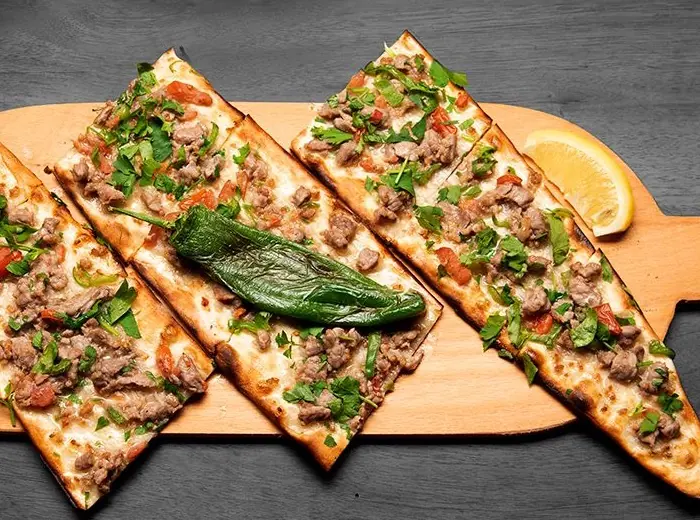
Develi civiklisi is a thin flatbread from Develi, a district of Kayseri in central Anatolia. Its name comes from the soft, moist texture — "civik" in the local dialect — that appears when the dough is rolled paper-thin and the topping bakes into it rather than sitting on top. That is what separates it from an ordinary minced-meat pide: the base is not thick and crunchy but thin and tender.
We make ours with hand-cut beef. The pide goes straight onto the floor of the stone oven, beside the oak embers, and bakes fast at high heat — the edges char lightly, the centre stays soft.
- Origin
- Develi, Kayseri (Everek)
- Dough
- Rolled paper-thin, made fresh daily
- Topping
- Hand-cut beef
- Baking
- Oak embers, stone oven
Where to eat Develi civiklisi in Istanbul? One of the few addresses keeping the original recipe is Develi Seyrani Pide in Fatih Kadirga. See the address and directions.
Civiklisi is a flatbread from Develi, a district of Kayseri in central Anatolia. Its name comes from civik — the local word for a soft, moist texture.
What makes civiklisi different
The difference is in the dough. In an ordinary pide the dough is rolled to a certain thickness and the topping sits on top of it; the two bake separately and the result is crisp. In civiklisi the dough is rolled paper-thin and the topping is not laid on top — it bakes into the dough. The juices from the meat run into the base as it cooks. That is why civiklisi stays soft and moist rather than crisp, and why it carries that name.
The meat is different too. Instead of mince, civiklisi uses hand-cut diced beef and lamb. Mince spreads into a paste across the dough; diced meat stays in pieces, so you meet the meat in every bite.
How it is baked
Civiklisi has to bake hot and fast. With dough this thin, a long bake simply dries it out. So the pide goes straight onto the floor of the stone oven, right beside the oak embers. The stone holds the heat underneath and spreads it evenly: the base browns while the top stays tender.
The wood matters as well. Oak burns slowly and holds a high heat for a long time, and it leaves a faint smokiness behind. A gas or electric oven produces none of that.
Develi or Everek? Develi was formerly called Everek. Older accounts of the region's cooking — and some of the older bakers — still use that name. They are the same place.
How it is eaten
Civiklisi is sliced and eaten straight out of the oven, while it is hot; left to stand, the texture stiffens. It is usually served with ayran, a salted yoghurt drink, alongside a roasted green pepper and a wedge of lemon. One portion is enough for most people; for two sharing, a portion and a half is about right.
Civiklisi and ordinary minced-meat pide: the difference
These two are often confused, yet they are not even made from the same dough. Once you have seen the difference, you will not mix them up again:
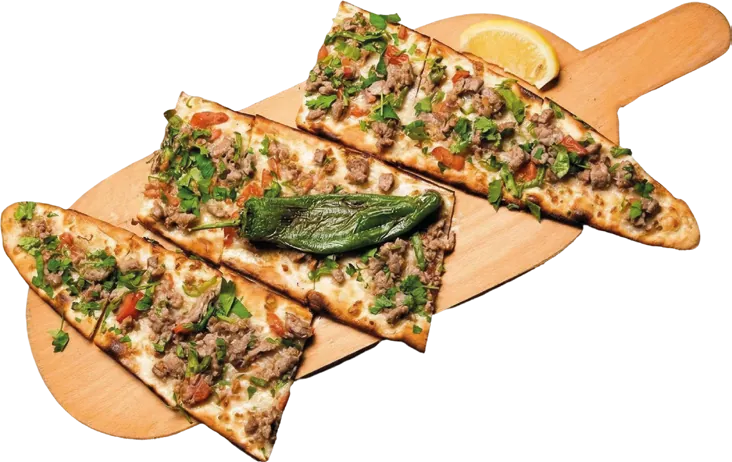
Develi Civiklisi
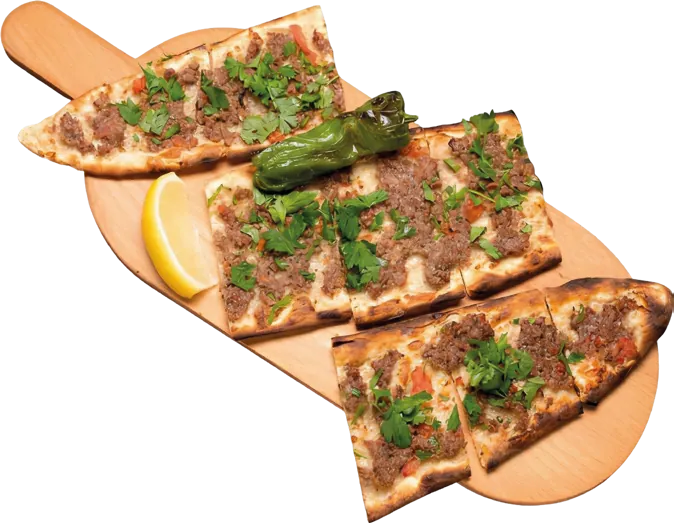
Minced Meat Pide
Both bake over the same oak embers, in the same stone oven. But they eat completely differently. Someone who dislikes minced-meat pide may well love civiklisi — and the other way round.
Civiklisi with onion
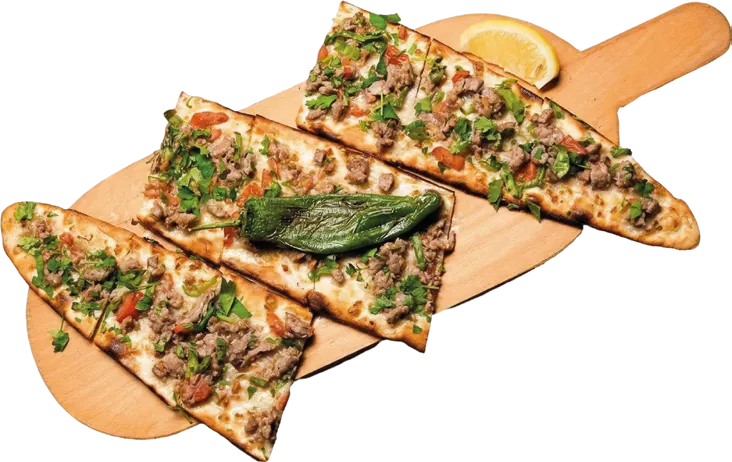
The same dough with onion added. The onion releases its water in the oven and works into the meat; the result is a little softer and a little sharper. In Develi it is as common as the plain version, and most of our guests order both and share.
What to eat and drink with it
Civiklisi is traditionally served with ayran, a salted yoghurt drink that cuts through the fat of the meat. A roasted green pepper and a wedge of lemon come with it; squeezing the lemon straight onto the pide is the local habit.
As for portions: one is enough for most people. For two sharing, a portion and a half is about right. If you want something sweet afterwards, we suggest Develi tahinlisi — it comes out of the same oven.
Develi, Everek and Seyrani
Develi is a district of Kayseri on the slopes of Mount Erciyes; its former name is Everek. Older accounts of the region's cooking, and some of the older bakers, still use that name. Civiklisi belongs to this district — it is not made the same way even in the other districts of Kayseri.
Seyrani is the name of the folk poet the same district produced — he lived in Everek in the 19th century and is one of the known names of Anatolian folk poetry. Like the name of the region, its cooking comes from that same soil.
Where to eat Develi civiklisi in Istanbul
Very few places in Istanbul serve civiklisi to the original recipe. Develi Seyrani Pide began in Develi in 1960 and is now a family business in Fatih Kadirga — an 8 to 10 minute walk downhill from Sultanahmet Square, and about ten minutes from the Grand Bazaar or Cemberlitas. On public transport, take the T1 tram to Cemberlitas or Sultanahmet.
The room is small and the oven is in it — you watch the dough being rolled and the pide going into the fire from your table.
Frequently Asked
About Develi Civiklisi
& Tahinlisi
What is Develi civiklisi?
Develi civiklisi is a thin flatbread from Develi, a district of Kayseri in central Anatolia. Its name comes from the soft, moist texture — "civik" in the local dialect — that results from rolling the dough paper-thin and letting the meat topping bake into it rather than sit on top. It is baked briefly at high heat over oak embers in a stone oven, so the edges char lightly while the centre stays tender.
Where can I eat Develi civiklisi in Istanbul?
Develi Seyrani Pide in Fatih Kadirga is one of the few places in Istanbul serving Develi civiklisi to the original recipe. The address is Emin Sinan Mahallesi, Piyer Loti Caddesi No:69/B, Fatih, Istanbul — around a 10 minute walk from Sultanahmet Square and the Grand Bazaar. Open every day, 12:00–23:00.
What is the difference between civiklisi and ordinary pide?
In a standard minced-meat pide the dough is rolled thicker and the topping sits on the surface, giving a crisp result. In civiklisi the dough is rolled far thinner and the topping bakes into it, so the texture stays soft and moist — "civik". Both are baked over oak embers, but they eat completely differently.
Are there any pide without meat?
Yes. Develi tahinlisi is made from dough, tahini and sugar, and the walnut pide (cevizli) from fresh walnuts and spices — neither contains meat. Develi civiklisi, the minced meat pide and the cheese & sucuk pide all contain meat.