Signature · 02
What Is
Develi Tahinlisi?
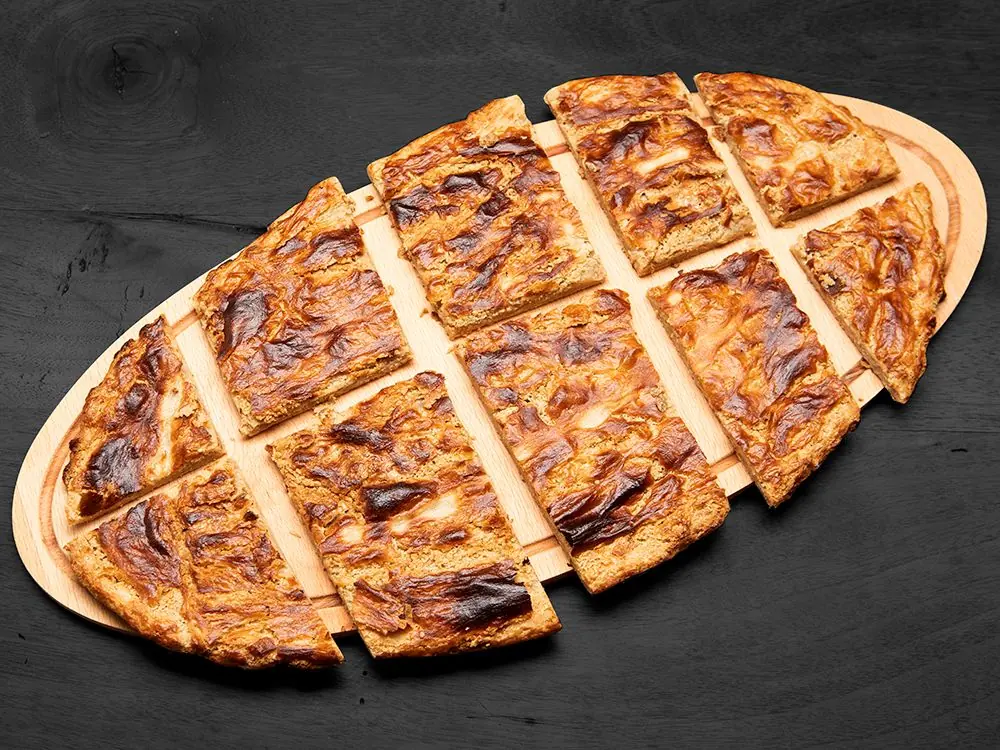
Develi tahinlisi is made by rolling thin dough with tahini and sugar into layers, then baking it in the stone oven. Under high heat the tahini caramelises: the top turns deep gold, the layers inside stay soft.
It leans sweet, so most guests order it after a meal or alongside Turkish tea. What sets it apart from other tahini pastries is the faint smokiness the wood fire leaves behind, and how thin the dough is worked.
- Character
- Sweet · served with tea
- Filling
- Layers of tahini and sugar
- Baking
- Stone oven
- Served
- Sliced, warm
Looking for Develi tahinlisi in Istanbul? We bake it fresh in the stone oven every day. +90 212 518 19 61
Develi tahinlisi is a traditional sweet from Develi: tahini and sugar rolled in layers of thin dough and baked in a stone oven.
Is it a dessert or a pide?
Both. The dough is pide dough and it is baked like a pide, but the filling is tahini and sugar, and it eats sweet. It is usually ordered after a meal or alongside a glass of tea rather than as a main course.
What the oven does to the tahini
The character of this pide comes from the tahini caramelising in the oven's heat. Combined with sugar it turns deep gold, gives off a distinct aroma, and forms a thin crust across the top, while the layers underneath stay soft. Having crisp and soft in the same slice is what this sweet is known for.
Tahini pastries are common across Anatolia, but two things set tahinli pide apart: how thin the dough is, and the faint smokiness the wood fire leaves behind.
Kaymakli tahinli — the same pide served with kaymak, Turkish clotted cream. Hot tahini against cold cream changes the dish noticeably; worth ordering if it is your first time.
How it is served
Tahinli pide is sliced and served hot. As it cools the tahini sets and the texture suffers, which is why it is baked to order. Plain Turkish tea goes well with it and cuts through the richness.
Tahinli, cevizli, kaymakli: three sweet pides
Sweet pide is not a single thing in Develi cooking. Three different flavours come out of the same thin dough, and all three bake in the same stone oven:
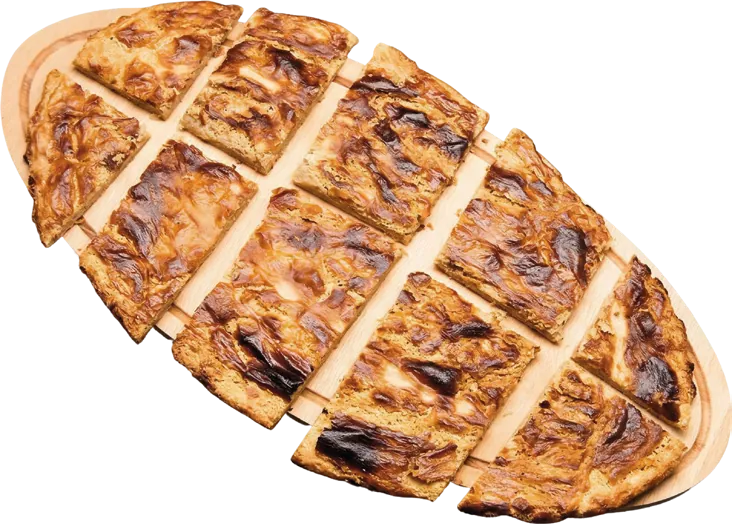
Tahinli
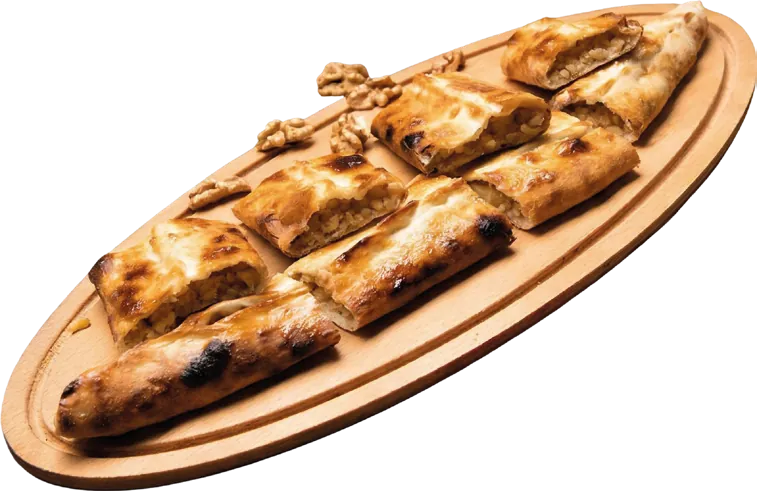
Cevizli (walnut)
Kaymakli tahinli
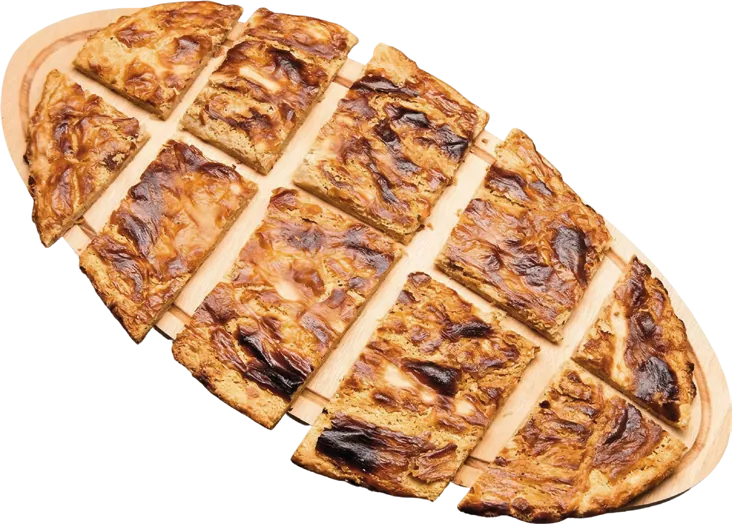
The same tahini pide, served with kaymak, Turkish clotted cream. Hot tahini against cold cream changes the dish noticeably — the cream softens the richness of the tahini. For anyone trying tahini pide for the first time, this is the version we suggest.
What to drink with it
Plain Turkish tea goes with tahini pide. What cuts the richness of the sweet is the bitterness of the tea; sugared tea upsets that balance. Turkish coffee works too, but tea is the local pairing.
If you want something savoury first, the usual order is to begin with Develi civiklisi — both come out of the same oven, one after the other.
Why is it so hard to find in Istanbul?
Tahini pide requires the dough to be rolled paper-thin and the tahini spread layer by layer; it takes skill and it takes time. In a kitchen where demand is irregular, keeping that recipe alive is difficult, so most pide houses never put it on the menu at all.
In Develi it is an everyday sweet. We brought the recipe from there, so we bake it every day — to order, in the stone oven.
Where to eat Develi tahinlisi in Istanbul
Tahinli pide is even harder to find than civiklisi — almost nowhere in Istanbul makes it regularly. Develi Seyrani Pide bakes it fresh in the stone oven every day in Fatih Kadirga, an 8 to 10 minute walk from Sultanahmet.
Frequently Asked
About Develi Civiklisi
& Tahinlisi
What is Develi tahinlisi? Is it sweet?
Yes, it leans sweet. Develi tahinlisi is made by rolling thin dough with tahini and sugar into layers, then baking it in a stone oven. The tahini caramelises in the heat, giving a deep golden crust and soft layers inside. It is usually eaten after a meal or alongside Turkish tea.
Are there any pide without meat?
Yes. Develi tahinlisi is made from dough, tahini and sugar, and the walnut pide (cevizli) from fresh walnuts and spices — neither contains meat. Develi civiklisi, the minced meat pide and the cheese & sucuk pide all contain meat.